
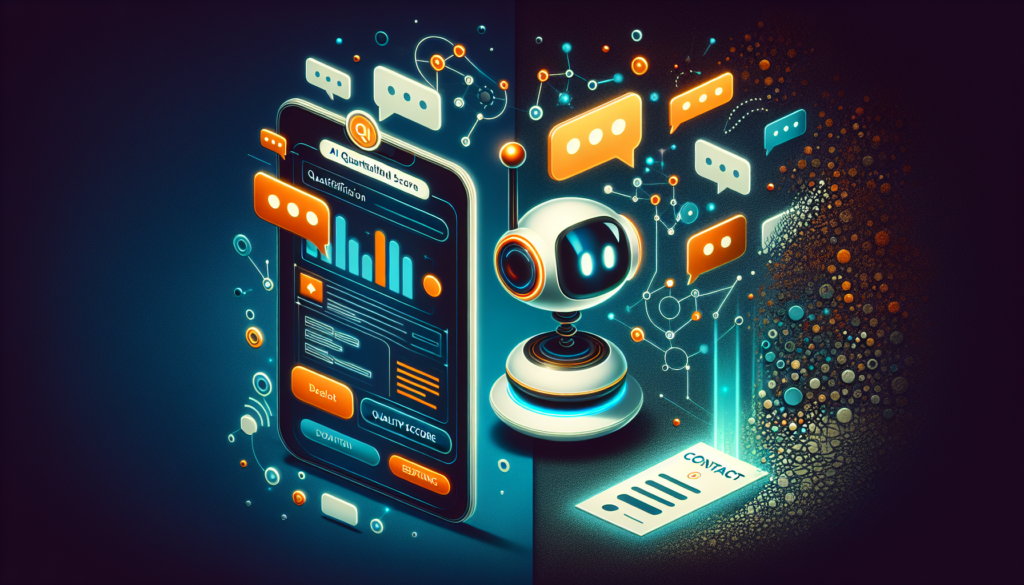
Web forms have been the default lead capture tool for two decades, and most businesses never question whether they are actually the best option. The data tells a different story: traditional web forms convert at 2-5% on average, while AI-powered chatbots convert at 10-20% — a 3-5x improvement that translates directly into more leads, more sales calls, and more revenue from the same website traffic. AI chatbots do not just collect information passively like a form — they ask intelligent qualifying questions, respond to objections in real time, score leads automatically, and route hot prospects to your sales team instantly. This guide breaks down the data-driven case for replacing or supplementing your web forms with AI-powered lead qualification and shows you exactly how to implement it.
Why Web Forms Underperform
Web forms were revolutionary in 2005. In 2026, they are a conversion bottleneck that most businesses have simply accepted as normal. The fundamental problem with web forms is friction: they ask for too much information upfront, they offer nothing in return during the process, and they feel impersonal and transactional at the exact moment when a potential customer is trying to decide whether your business is worth their time and trust.
- Average form conversion rate: 2-5% — That means 95-98% of visitors who see your form leave without filling it out. On a page with 1,000 monthly visitors, you are losing 950+ potential leads to friction, hesitation, and form fatigue.
- Form abandonment rate: 67% — Even among visitors who start filling out a form, two-thirds abandon before hitting submit. The top abandonment triggers: too many fields, asking for phone numbers too early, and unclear privacy expectations.
- No qualification happening — A web form captures whatever the visitor decides to type. It cannot ask follow-up questions, clarify responses, or distinguish between a tire-kicker requesting information and a hot prospect ready to buy today.
- Delayed response time — After a form submission, the average business takes 42 hours to respond. By then, the lead has contacted 2-3 competitors. Harvard Business Review found that leads contacted within 5 minutes are 21x more likely to convert than those contacted after 30 minutes.
- One-size-fits-all experience — Every form visitor gets the same fields and the same experience regardless of their intent, budget, timeline, or needs. A CEO ready to spend $10,000 and a student doing homework research both see the same generic contact form.
- Mobile form friction — Over 60% of web traffic is mobile, and typing on small screens is painful. Multi-field forms on mobile devices have abandonment rates approaching 80%, which means you are losing the majority of your mobile traffic at the conversion point.
“The problem is not that people do not want to contact you. The problem is that your form makes it too hard, too slow, and too impersonal for them to bother.”
How AI Chatbots Change the Game
AI chatbots replace the passive form experience with an active, intelligent conversation that adapts to each visitor in real time. Instead of presenting a static list of fields and hoping the visitor fills them out, a chatbot engages proactively with a friendly greeting, asks one question at a time in a conversational flow, responds intelligently to answers, and guides the visitor through a qualifying process that feels like a helpful conversation rather than an interrogation. The result is dramatically higher engagement, better lead quality, and faster conversion.
- Conversational interface reduces friction — Instead of facing a wall of empty form fields, the visitor sees a single friendly question: “Hi! What brings you to our site today?” This micro-commitment approach gets 3-4x more people to start the conversation compared to clicking into a form.
- One question at a time — Chatbots ask qualifying questions sequentially, each building on the previous answer. “What service are you interested in?” followed by “What is your approximate budget?” followed by “When are you looking to get started?” feels natural and conversational rather than invasive.
- Intelligent branching — Based on responses, the chatbot follows different conversation paths. A visitor interested in web design gets web design qualifying questions. A visitor interested in SEO gets SEO-specific questions. No irrelevant fields, no wasted time.
- Instant objection handling — When a visitor expresses hesitation (“I am not sure about my budget” or “I need to think about it”), the chatbot can address the concern immediately with relevant information, case studies, or reassurance — something a form can never do.
- 24/7 availability — AI chatbots qualify leads at 2 AM on a Sunday just as effectively as at 2 PM on a Tuesday. You never miss a hot lead because your office was closed or your team was busy with other customers.
- Personality and brand voice — Unlike sterile forms, chatbots can be programmed with your brand’s personality — friendly, professional, humorous, or authoritative. This creates a memorable first impression that differentiates you from competitors still using generic forms.
“A chatbot does not replace your sales team. It gives your sales team better leads, faster qualification, and more hours in the day by handling the repetitive qualifying conversations that consume most of their time.”
Conversion Benchmarks: Chatbots vs Forms
The conversion data comparing AI chatbots to traditional web forms is compelling across every industry and business size. These benchmarks come from aggregated data across thousands of businesses that have implemented AI chatbot lead qualification alongside or in replacement of their existing web forms. The numbers consistently show that chatbots outperform forms by a significant margin when implemented correctly.
- Overall conversion rate — Web forms average 2-5% conversion. AI chatbots average 10-20% conversion. That is a 3-5x improvement in lead capture from the same traffic, which means 3-5x more leads without spending an additional dollar on advertising.
- Lead quality improvement — Because chatbots ask qualifying questions and score responses, the leads they generate are 40-60% higher quality than form submissions. Sales teams report spending less time on unqualified leads and more time closing deals.
- Response time reduction — Chatbots respond instantly (under 2 seconds) compared to the 42-hour average for form follow-up. This speed advantage alone increases conversion rates by 391% according to InsideSales research on lead response timing.
- After-hours lead capture — 35-45% of chatbot-qualified leads come outside business hours when no human is available. These are leads that would have bounced from a form because there was no immediate engagement or confirmation of next steps.
- Mobile conversion improvement — Chatbot conversations on mobile devices convert at nearly the same rate as desktop because tapping pre-built response buttons is infinitely easier than typing into form fields on a small screen. Mobile chatbot conversion rates are 2-3x higher than mobile form rates.
- Cost per lead reduction — When you capture 3-5x more leads from the same traffic, your effective cost per lead drops by 60-80%. A business spending $5,000/month on Google Ads that switches from forms to chatbots can generate the same number of leads at $1,000-$2,000/month in ad spend.
“The math is simple: if your website gets 1,000 visitors per month, a 3% form conversion rate gives you 30 leads. A 15% chatbot conversion rate gives you 150 leads. Same traffic, 5x the results.”
Building the Perfect Qualifying Conversation
The effectiveness of an AI chatbot depends entirely on the quality of its qualifying conversation flow. A poorly designed chatbot is just an annoying popup. A well-designed chatbot is a conversion machine that visitors actually enjoy interacting with. The key is designing a conversation that feels natural while systematically gathering the information your sales team needs to close the deal.
- Opening message (the hook) — Start with a friendly, specific greeting that acknowledges what the visitor is looking at: “Hey! I see you are checking out our web design services. Want me to give you a quick idea of what a project like yours would cost?” This is infinitely more engaging than “How can I help you today?”
- Intent qualification (question 1) — “What is the main thing you are looking to accomplish?” with pre-built button options: “New website,” “Redesign existing site,” “Fix a specific problem,” “Just exploring.” This immediately categorizes the lead’s intent level.
- Budget qualification (question 2-3) — “Do you have a budget range in mind?” with ranges as buttons: “Under $2K,” “$2K-$5K,” “$5K-$10K,” “$10K+.” Button-based responses eliminate the awkwardness of typing a number and increase response rates by 50%.
- Timeline qualification (question 4) — “When are you looking to get started?” with options: “ASAP,” “Next 30 days,” “Next 2-3 months,” “Just planning ahead.” Timeline combined with budget tells your sales team exactly how to prioritize this lead.
- Contact capture (final step) — Only ask for name, email, and optionally phone number at the very end of the conversation, after the visitor has invested time and received value from the interaction. At this point, contact info feels like a natural next step rather than an upfront demand.
- Instant CRM routing — When the conversation ends, the chatbot automatically creates a contact in Elevated Ideas’ CRM with all qualifying data attached, assigns a lead score based on responses, and triggers the appropriate follow-up workflow. Hot leads get instant notifications to your sales team.
- Fallback to human — Program the chatbot to offer a live handoff when it detects high-value opportunities or complex questions it cannot handle. “This sounds like a great project! Let me connect you with Ryan directly” creates a seamless transition from AI to human.
“The best qualifying chatbot conversations feel like talking to a helpful, knowledgeable assistant — not like filling out a form with extra steps. Design for the human experience, and the conversion data follows.”
Automated Lead Scoring via Chatbot
One of the most powerful advantages of AI chatbots over web forms is automated lead scoring that happens in real time during the conversation. Instead of your sales team manually reviewing form submissions and guessing which leads are worth calling first, the chatbot assigns a numerical score based on every response, and your CRM automatically routes leads to the right workflow based on that score. High-value leads get immediate human attention. Lower-value leads enter nurture sequences. Everyone gets the right follow-up at the right time.
- Response-based scoring model — Assign points to each response: budget over $5K (+30 points), timeline within 30 days (+25 points), decision-maker status (+20 points), specific project details (+15 points), referral from existing customer (+40 points). The total score determines the lead’s priority level.
- Behavioral scoring layer — Add points based on how the visitor interacts: completed the full conversation (+20), responded within seconds to each question (+10), asked additional questions about services (+15), visited pricing page before chatting (+10). Engagement behavior reveals intent.
- Score thresholds and routing — Hot leads (75+ points) trigger instant SMS/email alerts to your sales team for immediate follow-up. Warm leads (40-74 points) enter an automated nurture sequence with case studies and testimonials. Cold leads (under 40 points) receive educational content and periodic check-ins.
- CRM integration automation — Lead scores, conversation transcripts, qualifying answers, and contact information all flow automatically into Elevated Ideas’ CRM. Sales reps see a complete picture of every lead before making their first call — no more going in blind.
- Score decay and updates — Lead scores should decay over time if the contact does not engage further. A hot lead from 30 days ago who has not responded to follow-up is no longer hot. Set up automatic score reduction for inactivity to keep your priority list accurate.
- Continuous model refinement — Track which lead scores actually convert to customers and adjust your scoring model quarterly. If leads with budget answers of “$2K-$5K” convert at the same rate as “$5K+,” adjust the scoring to reflect reality rather than assumptions.
“Lead scoring turns your chatbot from a lead capture tool into a lead intelligence system. Your sales team stops chasing every lead equally and starts closing the ones that matter most.”
Implementation Best Practices
Implementing an AI chatbot for lead qualification is straightforward when you follow proven best practices. The biggest mistakes businesses make are launching a chatbot that is too aggressive (popup on every page after 0 seconds), too complicated (15-question qualifying flow), or too generic (no personalization based on the page the visitor is on). Here is how to get implementation right the first time.
- Strategic placement — Place the chatbot on high-intent pages first: service pages, pricing pages, contact pages, and landing pages. Do not put it on every page of your site from day one. Start with 3-5 pages where visitors are most likely to be considering a purchase decision.
- Timing and triggers — Do not popup immediately on page load. Wait 10-15 seconds or trigger on scroll depth (50%+ of page) or exit intent. The visitor needs time to consume content before being engaged. Immediate popups feel pushy and get closed without reading.
- Mobile optimization — Ensure your chatbot widget is small and unobtrusive on mobile devices. A chat bubble in the corner works. A large overlay that covers 50% of the mobile screen does not. Test the entire conversation flow on actual mobile devices before launching.
- Conversation length — Keep qualifying conversations to 4-6 questions maximum. Each additional question reduces completion rates by 5-10%. Capture the essential qualifying information (intent, budget, timeline, contact info) and nothing more during the initial conversation.
- A/B test against your forms — Do not remove your existing forms immediately. Run both in parallel for 60-90 days and measure conversion rates, lead quality, and downstream revenue from each source. Let the data tell you which performs better (chatbots almost always win).
- Personality and tone — Program your chatbot with a consistent personality that matches your brand. Elevated Ideas’ chatbot is friendly, professional, and slightly conversational — like texting with a knowledgeable business advisor rather than talking to a robot.
- Compliance and transparency — Always disclose that the visitor is chatting with an AI assistant, not a human. Include privacy policy links and data handling information. Transparency builds trust and is required by many data privacy regulations including GDPR and CCPA.
“The goal is a chatbot that feels helpful, not pushy. If your chatbot annoys visitors instead of helping them, you have a design problem, not a technology problem.”
Measuring Chatbot ROI
The return on investment from AI chatbot lead qualification is measurable and typically substantial. Beyond the headline conversion rate improvements, chatbots deliver cost savings, time savings, and revenue gains across multiple dimensions of your business. Here is how to calculate and track your chatbot ROI accurately so you can optimize performance and justify the investment.
- Direct lead value calculation — If your average customer is worth $5,000 and your close rate on chatbot leads is 20%, each chatbot lead is worth $1,000. If the chatbot generates 50 additional leads per month that forms were missing, that is $50,000 in pipeline value per month from a tool that costs $100-$300/month.
- Cost per lead comparison — Calculate your current cost per form lead (ad spend divided by form submissions) and compare it to cost per chatbot lead. Most businesses see a 60-80% reduction in effective cost per lead because the chatbot captures more leads from the same traffic.
- Sales team time savings — If your chatbot handles qualifying conversations that previously consumed 2-3 hours of your sales team’s day, that is 40-60 hours per month of high-value selling time recovered. At $50/hour, that is $2,000-$3,000/month in productivity gains.
- After-hours revenue capture — Track what percentage of chatbot leads come outside business hours. These are leads that would have been lost entirely without the chatbot. Any revenue generated from after-hours leads is pure incremental gain.
- Lead quality metrics — Compare the qualification rate (percentage of leads that become sales opportunities) and close rate between chatbot leads and form leads. Higher quality leads mean higher revenue per lead and less wasted sales effort.
- Customer feedback — Survey customers about their experience. Positive chatbot experiences contribute to brand perception and can influence referral rates and customer lifetime value in ways that are harder to quantify but genuinely impactful.
“Most businesses achieve full chatbot ROI within the first month of implementation. The combination of more leads, better leads, and faster response times creates a compounding revenue advantage that grows over time.”
Ready to Capture More Qualified Leads?
Elevated Ideas builds AI-powered chatbot systems that qualify leads 24/7, score them automatically, and route hot prospects to your sales team in real time — all integrated with your CRM.
No phone call needed for the marketing report. Delivered straight to your inbox.
COMMON QUESTIONS
AI Chatbot Lead Qualification FAQ
How much does an AI chatbot cost compared to traditional web forms?
AI chatbot platforms typically cost $50-$300 per month depending on features and conversation volume. Traditional web forms are technically free but consider the hidden costs: lower conversion rates mean you need 3-5x more traffic (and ad spend) to generate the same number of leads. When you factor in the increased lead volume and quality from chatbots, most businesses see a positive ROI within the first month.
Will an AI chatbot annoy my website visitors?
Only if it is poorly implemented. A well-designed chatbot with proper timing (10-15 second delay or scroll trigger), strategic placement (high-intent pages only), and a friendly, helpful tone actually improves user experience. The key is making the chatbot feel like a helpful assistant rather than an aggressive popup. Always include a clear close/dismiss button.
Can AI chatbots really replace web forms entirely?
For most businesses, chatbots supplement rather than replace forms initially. Some visitors prefer forms, especially for simple requests. The recommended approach is running both in parallel, tracking conversion rates from each, and gradually shifting emphasis toward whichever performs better. In our experience, chatbots become the primary lead capture method within 90 days.
How does the chatbot integrate with my CRM?
Elevated Ideas’ AI chatbot integrates directly with our CRM platform. Every conversation automatically creates a contact record with qualifying data, lead score, conversation transcript, and source information. Hot leads trigger instant notifications to your sales team. The entire flow from first conversation to CRM entry to follow-up workflow is fully automated.
What if the chatbot cannot answer a visitor’s question?
Well-designed chatbots include fallback responses and human handoff triggers. When the AI encounters a question outside its training, it acknowledges the limitation and offers to connect the visitor with a human team member, schedule a callback, or take a message. The visitor always has a path to getting their question answered.
How long does it take to set up an AI chatbot?
A basic qualifying chatbot can be set up and tested in 1-2 weeks. A fully optimized chatbot with custom conversation flows, CRM integration, lead scoring, and automated workflows typically takes 2-4 weeks to implement. We handle the entire setup process including conversation design, integration, testing, and training.
Do chatbots work for B2B businesses or just B2C?
Chatbots work exceptionally well for B2B businesses. B2B sales cycles are longer and involve more qualifying criteria (budget, timeline, decision-maker status, company size), which makes conversational qualification more effective than generic forms. B2B chatbot leads tend to be higher quality because the qualifying conversation filters out unfit prospects before they ever reach your sales team.
Can I see the conversation transcripts from my chatbot?
Yes. Every chatbot conversation is logged with full transcripts, timestamps, lead scores, and qualifying data. These transcripts are available in your CRM dashboard and can be reviewed by your sales team before making follow-up calls. Transcripts also help you refine your chatbot’s conversation flow by identifying where visitors drop off or express confusion.
Written by Ryan Mason, Founder of Elevated Ideas — WordPress web design, CRM automation, and AI-powered marketing. Last updated 2026.