
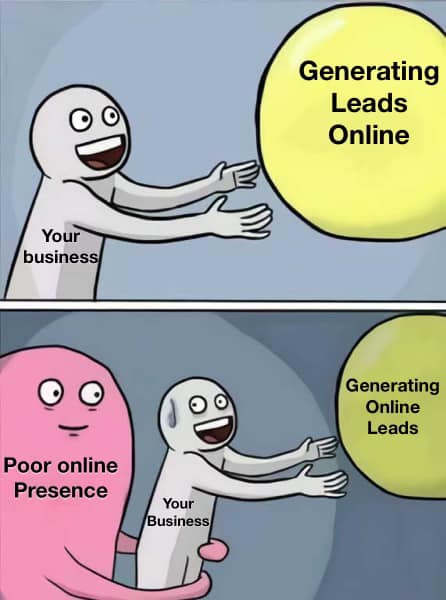
Every business owner thinks they know how their marketing is performing. But when was the last time you actually measured it? A free marketing audit strips away the guesswork and shows you exactly where your digital presence stands — the wins, the gaps, and the opportunities your competitors are already exploiting.
Here is a reality check most businesses need to hear: 68% of all online experiences begin with a search engine, yet only 0.63% of searchers click on results from the second page of Google. If your business is not on page one, you are essentially invisible. A comprehensive digital marketing audit identifies exactly why you are not ranking and gives you a clear path to fix it.
Whether you run a local service business, a regional agency, or an e-commerce store, the audit process is the same: diagnose, prioritize, and act. This guide walks you through everything a proper marketing audit covers, what the results actually mean, and how to use them to grow your revenue without wasting money on tactics that do not work.
What Is a Marketing Audit — And Why Should You Care?
A marketing audit is a systematic evaluation of your entire digital footprint. It examines your website, search rankings, Google Business Profile, social presence, competitor positioning, and more — then delivers a prioritized list of what needs to be fixed.
Think of it like a health checkup for your business. You might feel fine, but the data often tells a very different story. 88% of online consumers are less likely to return to a site after a bad experience, and most business owners have no idea their site is delivering one.
A proper digital marketing audit answers three critical questions:
- Where are you losing customers right now? — Broken pages, slow load times, missing calls to action, poor mobile experience
- Where are your competitors beating you? — Ranking gaps, content they publish that you do not, backlinks they have earned
- What is the fastest path to more revenue? — Quick wins that move the needle in 30 to 90 days versus long-term strategy plays
What a Marketing Audit Actually Covers
Not all audits are created equal. A surface-level scan that spits out a score is not an audit — it is a sales pitch. Here is what a real, comprehensive website audit checklist should include:
SEO Rankings & Keyword Analysis
This is the foundation. We analyze which keywords your site currently ranks for, where you appear on Google for your most valuable search terms, and which high-intent keywords you are completely missing. We look at search volume, keyword difficulty, and ranking trends over time to identify both quick wins and long-term opportunities.
Website Speed & Core Web Vitals
Google has confirmed that page speed is a ranking factor, and the data backs it up: a one-second delay in load time reduces conversions by 7%. We test your site on both desktop and mobile, measuring Largest Contentful Paint, First Input Delay, and Cumulative Layout Shift — the three Core Web Vitals that Google uses to evaluate user experience.
Mobile Responsiveness
Over 60% of all Google searches now happen on mobile devices, and Google uses mobile-first indexing. That means Google ranks your site based on the mobile version, not the desktop version. If your site is hard to navigate, slow to load, or poorly formatted on a phone, it is hurting your rankings across every device.
Google Business Profile Optimization
Your Google Business Profile is the single most important asset for local visibility. We evaluate your profile completeness, category accuracy, review volume and recency, photo quality, post frequency, and service area configuration. Businesses with complete profiles are 70% more likely to attract location visits.
Competitor Analysis
You do not operate in a vacuum. We identify your top three to five competitors in search, analyze their keyword strategies, backlink profiles, content volume, and Google Business Profile strength. This reveals exactly where you need to invest to close the gap — or widen the lead you already have.
Why Marketing Audits Matter More Than Ever
The digital landscape has changed dramatically in the last few years. AI-powered search, voice assistants, and constantly evolving algorithms mean that what worked 12 months ago might be hurting you today. Here is why regular audits are no longer optional:
- Algorithm updates happen constantly. Google pushes thousands of updates per year, including major core updates that can shift rankings overnight. An audit catches ranking drops before they become revenue drops.
- Your competitors are not standing still. While you are busy running your business, your competitors are investing in SEO, content, and online reputation. An audit shows you exactly how far ahead or behind you are.
- Customer behavior keeps shifting. More voice searches, more mobile-first browsing, more emphasis on reviews and trust signals. An audit ensures your marketing matches how people actually search today, not how they searched three years ago.
- Marketing budgets are tighter. Every dollar needs to work harder. An audit shows you which channels deliver ROI and which ones are draining your budget with nothing to show for it.
What to Expect From Your Audit Results
When Elevated Ideas delivers a free marketing audit, you receive a clear, jargon-free report that covers three areas:
- Current Performance Snapshot — Where you rank today, your site speed scores, mobile usability, and Google Business Profile health. No vanity metrics — just the numbers that affect revenue.
- Prioritized Opportunities — A ranked list of fixes and improvements, organized by impact and effort. Quick wins go first (think: fixing broken links, adding missing meta descriptions, completing your Google Business Profile) followed by strategic plays like ongoing SEO investment and content creation.
- Competitor Comparison — A side-by-side look at how you stack up against the businesses ranking above you. This is often the most eye-opening part of the audit because it shows specific, actionable gaps you can close.
“Most businesses are surprised by what they find. Not because they are doing everything wrong — but because a few simple fixes could be making a massive difference.”
Red Flags in Your Digital Presence
Certain issues signal deeper problems. If any of these sound familiar, a digital marketing audit is overdue:
- Your website takes more than 3 seconds to load. You are losing 53% of mobile visitors before they even see your homepage. Speed is not a luxury — it is a requirement.
- You have no idea which keywords you rank for. If you cannot name your top five ranking keywords, you are flying blind. SEO without data is just guessing.
- Your Google Business Profile has fewer than 20 reviews. Reviews are a top-three ranking factor for local search. Fewer than 20 tells Google — and customers — that your business lacks social proof.
- Your website is not mobile-friendly. Pinch-to-zoom text, overlapping buttons, or horizontal scrolling are conversion killers. Google also demotes non-responsive sites in search results.
- You have not updated your website in over a year. Stale content signals to Google that your business might not be active. Fresh content, updated service pages, and regular blog posts keep your site relevant.
- You are spending money on ads but not tracking conversions. Without proper tracking, you have no idea which ads produce customers and which ones waste money. An audit reveals the tracking gaps.
- Your competitors consistently outrank you. If the same businesses always appear above you in search, they are doing something you are not. An audit shows you exactly what that is.
DIY Website Audit Checklist
Before you schedule a professional audit, you can run through this quick self-assessment. Score yourself honestly on each item:
- Site loads in under 3 seconds — Test at PageSpeed Insights (aim for 90+ on mobile)
- Every page has a unique title tag and meta description — No duplicates, no missing tags
- Your site is fully responsive on mobile — Test on your phone and at least two different screen sizes
- Google Business Profile is 100% complete — All fields filled, correct categories, current hours, and 20+ photos
- You have 20+ Google reviews with a 4.0+ rating — And you respond to every one within 48 hours
- Your NAP is consistent everywhere — Name, address, and phone match exactly across Google, Yelp, Facebook, and all directories
- You publish fresh content at least monthly — Blog posts, service page updates, or Google Business Profile posts
- You have Google Analytics and Search Console set up — And you actually review the data at least monthly
- No broken links or 404 errors — Run a free crawl to catch pages that lead nowhere
- Your site has an SSL certificate — The URL shows “https” not “http” — Google penalizes insecure sites
If you checked fewer than seven of these, your digital presence has significant room for improvement. A professional free marketing audit will pinpoint exactly where to start.
How to Interpret Your Audit Results
Getting the data is step one. Knowing what to do with it is where the real value lives. Here is how to read your audit report like a pro:
- Focus on high-impact, low-effort fixes first. Fixing a missing meta description takes five minutes and can improve click-through rates by 5 to 10 percent. Rebuilding your entire website takes months. Start with the quick wins.
- Look at trends, not snapshots. A single speed test or ranking check tells you where you are today. Trends over three to six months tell you whether things are getting better or worse — and how fast.
- Compare against competitors, not arbitrary benchmarks. A page speed score of 75 might sound mediocre, but if every competitor in your space scores below 60, you are already winning. Context matters.
- Prioritize revenue-generating pages. Your homepage, top service pages, and contact page matter more than your privacy policy. Focus optimization efforts where the money is.
- Do not try to fix everything at once. Pick three to five items from your audit, execute them well, and measure the results before moving to the next batch. Consistent, focused improvement beats scattered effort every time.
When to Hire a Professional
A DIY audit gets you started, but there are clear signals that it is time to bring in an expert:
- You have done the basics but are not seeing results. If your Google Business Profile is complete, your site is fast, and you are still stuck on page two, the issue is likely deeper — technical SEO, backlink profile, or content strategy gaps that require professional tools and expertise.
- You do not have time to implement changes. Knowing what to fix and actually fixing it are two different things. A professional team handles implementation so you can focus on running your business.
- Your industry is competitive. In markets where multiple businesses are actively investing in SEO, staying competitive requires ongoing strategy — not just a one-time fix. Monthly SEO management, content creation, and technical optimization are the difference between ranking and being invisible.
- You need accountability and reporting. Professionals provide monthly reports, track KPIs, and adjust strategy based on performance data. Without that feedback loop, it is easy to stall out.
At Elevated Ideas, every engagement starts with a free marketing audit — because we believe you should see the opportunity before you invest. Our founder, Ryan Mason, wrote the book on turning online presence into real leads. Grab a copy of Likes to Leads to see the full playbook.
That book also tells a harder story: the panic disorder Ryan worked through while building the marketing playbook behind these audits. He shares it in Nothing To Fix Radio, a channel of songs about panic attacks and anxiety.
The Numbers That Should Convince You
If you are still on the fence about whether a marketing audit is worth your time, let the data speak for itself:
- Websites that load in under 2 seconds have a 15% higher conversion rate than sites that load in 5 seconds
- The first organic result on Google gets 27.6% of all clicks — the tenth result gets just 2.4%
- 46% of all Google searches have local intent — people looking for businesses near them, right now
- Businesses with 40+ Google reviews earn 54% more revenue than the average business in their category
- Mobile-friendly sites are 67% more likely to convert a visitor into a customer
- Companies that blog regularly generate 67% more leads per month than those that do not
Every one of these metrics is something a thorough website audit checklist evaluates. The question is not whether your business has room to improve — it is how much revenue you are leaving on the table by not finding out.
Free tool: Preview and perfect them with our free SERP snippet preview tool.
Get Your Free Marketing Audit
Stop guessing. In 15 minutes, we will show you exactly where your business stands online — your SEO rankings, site speed, Google Business Profile health, competitor positioning, and the quickest path to more leads. No cost, no commitment, no pressure.
Claim Your Free Audit →100% free — no credit card, no obligation. Serving businesses in Illinois, Missouri, and nationwide.
COMMON QUESTIONS
Marketing Audit FAQ
What exactly is included in a free marketing audit?
A free marketing audit from Elevated Ideas covers your SEO rankings and keyword performance, website speed and Core Web Vitals, mobile responsiveness, Google Business Profile optimization, competitor analysis, and a prioritized action plan. You receive a clear, jargon-free report showing where you stand and what to fix first.
How long does a marketing audit take?
The initial review takes about 15 minutes of your time. We handle the analysis on our end using professional-grade tools and typically deliver your complete audit report within 24 to 48 hours. The report includes specific recommendations ranked by impact and effort so you know exactly where to start.
Is the marketing audit really free? What is the catch?
There is no catch. The audit is 100% free with no obligation. We offer it because we believe business owners should understand where they stand before investing in any marketing services. Many clients choose to implement the recommendations themselves. For those who want professional help, we offer affordable SEO and digital marketing packages — but there is zero pressure to buy anything.
How often should I audit my marketing?
At minimum, run a comprehensive marketing audit every six months. Google pushes thousands of algorithm updates per year, competitors adjust their strategies, and customer behavior evolves constantly. Businesses that audit quarterly and adjust their strategy accordingly see significantly better long-term results than those that treat marketing as a set-it-and-forget-it activity.
What is the difference between a website audit and a marketing audit?
A website audit focuses specifically on your website — speed, mobile-friendliness, technical SEO, and on-page optimization. A marketing audit is broader and includes your website plus your Google Business Profile, local search presence, competitor positioning, review profile, and overall digital strategy. A comprehensive marketing audit gives you the full picture, not just one piece of it.
Can I do a marketing audit myself?
You can run a basic self-assessment using the DIY checklist in this guide — checking site speed, mobile responsiveness, Google Business Profile completeness, and review volume. However, professional audits use enterprise-grade tools that reveal keyword gaps, competitor backlink profiles, technical crawl errors, and ranking trends that free tools simply cannot detect. For the most actionable insights, a professional audit is worth the investment.
What should I do after I get my audit results?
Start with the quick wins — items your audit flags as high impact and low effort. These typically include fixing broken links, adding missing meta descriptions, completing your Google Business Profile, and optimizing your site speed. Then move to the strategic recommendations like content creation, ongoing SEO, and backlink building. The key is consistent, focused execution rather than trying to fix everything at once.
Do I need a marketing audit if I already run Google Ads?
Especially if you run ads. A marketing audit reveals whether your organic presence is strong enough to reduce your ad dependency over time. Many businesses overspend on ads because their organic rankings are weak. A strong SEO foundation means free, ongoing traffic that supplements or even replaces paid campaigns — dramatically improving your cost per acquisition and overall ROI.
Written by Ryan Mason, Founder of Elevated Ideas — helping businesses in Jacksonville IL, Springfield IL, and nationwide unlock their digital potential through data-driven marketing strategies. Last updated March 2026.